
Branded Calling: Get Your Calls Answered

Display your company name, logo, and call reason on your customers’ phones

The Problem: Good Calls Looking Like Spam

If your business makes outbound calls to customers, you’ve likely experienced the frustration: legitimate, important calls going unanswered because they show up as an unfamiliar number, or worse, flagged as “Spam Likely” or “Scam Risk.” Your staff wastes time leaving voicemails, customers miss time-sensitive information, and everyone loses.

The traditional solution of registering your numbers with spam analytics providers is labor-intensive and often ineffective. Numbers get flagged anyway. Customers still don’t pick up.

The Solution: Branded Calling

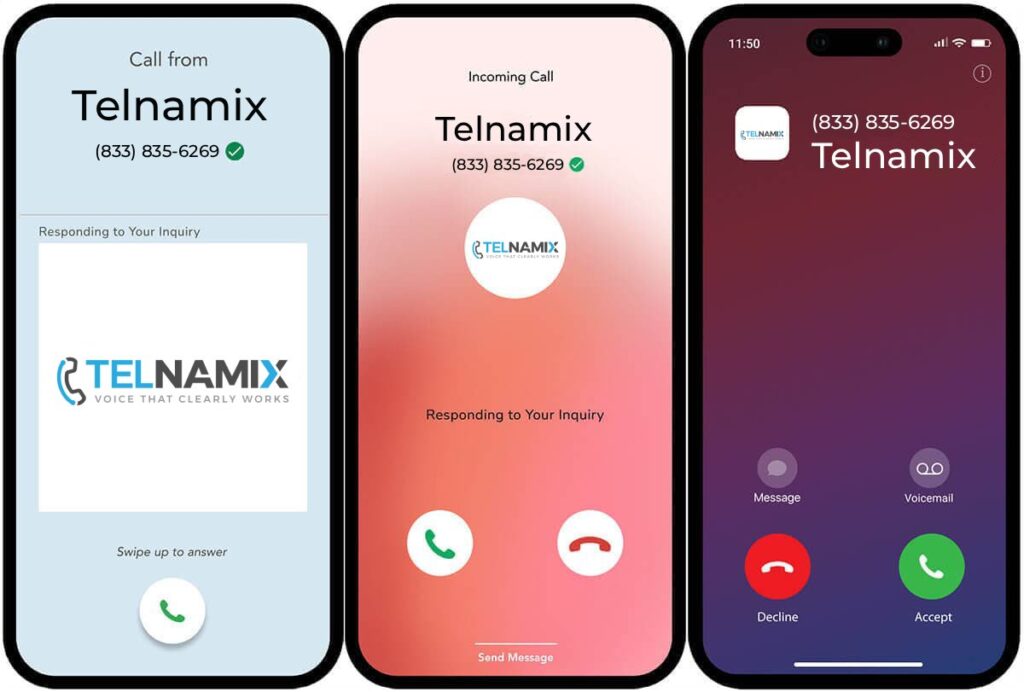
Branded calling is a new industry standard that displays your company name, logo, and the reason for your call directly on your customer’s phone screen when you call. Instead of seeing an unfamiliar 10-digit number, they see:

  • Your company name — clearly identifying who is calling
  • Your logo — visual brand recognition in the palm of their hand
  • The call reason — such as “Appointment Reminder” or “Account Security”

This information also stays visible in the customer’s call history, making missed calls much more likely to be returned.

Why Branded Calling Works

Unlike older caller ID approaches, branded calling uses a vetted, carrier-backed system. Here’s what that means for your business:

  • Your business is verified — A third-party vetting agent confirms your identity and your right to use your phone numbers, display name, and logo. Only legitimate businesses pass this vetting.
  • Carriers trust the calls — Participating wireless carriers have agreed to display vetted branded calls and, critically, have committed not to flag them as spam. When a carrier knows a call has been verified through this system, they treat it differently.
  • Built on proven technology — The system leverages the same call authentication technology that carriers already use to fight robocalls, extended to include your brand information.

Who Benefits Most

Branded calling is especially valuable for businesses that need to reach customers urgently, where a missed call means real cost or risk:

  • Healthcare providers — Appointment reminders, test results, prescription notifications. A missed appointment can mean hundreds of dollars in lost revenue.
  • Financial services — Fraud alerts, payment confirmations, account security calls. Time-sensitive calls that customers need to answer.
  • Home services and field technicians — Confirming appointments before dispatch. Nobody wants a wasted truck roll because the homeowner didn’t answer.
  • Auto repair and service shops — Calling for approval on additional repairs. Without customer authorization, the vehicle sits and your bay stays occupied.
  • Schools and educational institutions — When a school calls a parent, it’s important. Branded calling helps ensure those calls get through.
  • Any business with high-value outbound calls — If your team is making calls that matter, branded calling can help ensure they connect.

Coverage and Limitations

We believe in being upfront about what this service can and cannot do.

Branded calling displays on calls to mobile phones on participating wireless carriers. The major participating carriers cover approximately 75% of mobile traffic. AT&T is not currently participating in this program, which accounts for roughly 25% of calls to mobile numbers based on our traffic analysis.

For calls to landlines or non-participating carriers, calls will complete normally, they just won’t display the enhanced branding. The underlying call authentication still provides value by helping your calls avoid spam flags where supported.

How It Works

Getting set up with branded calling involves a straightforward process:

  • Business verification — Your business identity and phone numbers are verified by an authorized vetting agent. This confirms you are who you say you are and have legitimate use of the numbers.
  • Brand registration — Your company name, logo, and call reasons are registered and approved.
  • Automatic display — Once configured, your outbound calls automatically include the branded information. No changes to how your staff makes calls.

Pricing

Branded calling has two cost components:

  • Monthly base fee — A flat monthly charge that covers your business’s participation in the branded calling ecosystem, including maintaining your verified brand identity.
  • Per-call fee: 10 to 14 cents per call — Pricing depends on your monthly volume, with higher volumes receiving better rates.

You only pay the per-call fee when the branding is actually displayed. If a call goes to AT&T, a landline, or any carrier that doesn’t participate in the branded calling program, you’re not charged for that call. Billing is based solely on successful brand presentations — calls where your customer actually sees your name, logo, and call reason on their screen.

This means your cost directly reflects the value delivered. No paying for calls where the feature couldn’t work anyway.

Interested?

If branded calling sounds valuable for your business, we’d like to hear from you. Contact us to discuss whether it makes sense for your call volume and use case.


Telnamix
Voice That Clearly Works
SIP Trunking 101: A Modern Guide for Business Communications

SIP Trunking 101: A Modern Guide for Business Communications

At Telnamix, we know that business communication is changing faster than ever. Companies are moving away from costly, outdated phone systems and embracing SIP trunking—a flexible, scalable, and cost-effective solution built for today’s hybrid workforce.

In 2025, SIP trunking isn’t just a way to save money. It has become the backbone of modern business phone systems, enabling organizations to cut costs, integrate AI-powered features, and seamlessly support remote and mobile teams.

If your company is still relying on legacy phone infrastructure, this is the year to explore the shift. Traditional systems are phasing out, and businesses that make the transition are gaining a competitive advantage through lower costs, better flexibility, and stronger communication tools.


What Is SIP Trunking?

SIP stands for Session Initiation Protocol—a technology that turns analog voice signals into digital data and transmits them over the internet. Instead of relying on physical phone lines, SIP trunking uses virtual “trunks” to carry multiple calls, video streams, or messages at the same time.

In short, SIP trunking eliminates the limitations of traditional phone lines. You can add, remove, or adjust services instantly without waiting for technicians or investing in expensive hardware.


How SIP Trunking Works

SIP trunking connects your business PBX (Private Branch Exchange) to the public switched telephone network (PSTN) using your existing internet connection.

Key components of SIP trunking include:

  • Session Border Controllers (SBCs): Secure and manage call traffic, prevent fraud, and optimize call quality.
  • Automatic Failover: Keeps calls running even during outages by rerouting traffic.
  • Codec Transcoding: Ensures consistent voice quality across different systems.

This setup allows businesses to handle voice, video, and messaging on a single communication platform.


Why 2025 Is the Year of SIP Trunking

The SIP trunking market is projected to reach $43 billion by 2031, and adoption is accelerating. Here are the major trends driving the shift:

1. AI-Powered Features

Modern SIP trunking goes beyond dial tone. Providers now integrate real-time transcription, intelligent call routing, sentiment analysis, and fraud detection. Smart algorithms match calls with the right agents, reducing wait times and improving customer satisfaction.

2. Hybrid Workforce Enablement

With more employees working remotely, in-office, and on the go, SIP trunking supports hybrid teams effortlessly. Staff can make and receive calls on desk phones, mobile devices, or softphones while keeping the same business identity.

3. Unified Communications Integration

SIP trunking integrates seamlessly with platforms like Microsoft Teams, Zoom, and Cisco Webex, allowing businesses to unify voice, video, and messaging under one system. This reduces silos, streamlines collaboration, and creates consistent user experiences.

4. Advanced Security & Compliance

As cyber threats evolve, SIP trunking providers have raised the bar on VoIP security. Session border controllers, call monitoring, and encryption safeguard communication. Industries like healthcare and finance also benefit from HIPAA-compliant and SOC 2-certified SIP solutions with secure call recording options.


SIP Trunking vs. Legacy Phone Systems

Traditional business phones rely on physical lines and PRI circuits that limit capacity and require costly upgrades. Adding more lines means purchasing entire bundles, even if you only need a few.

SIP trunking eliminates these roadblocks:

  • Scale up or down instantly without hardware upgrades
  • Pay only for the channels you need
  • Use your existing high-speed internet connection to carry calls, video, and data

This flexibility translates into major cost savings and greater efficiency.


Benefits of SIP Trunking for Businesses

Here are the top reasons companies are switching to SIP trunking in 2025:

  1. Cost Savings – Cut telecom expenses by up to 50% by eliminating physical lines and reducing long-distance fees.
  2. AI-Enhanced Communication – Leverage analytics, transcription, and intelligent call routing for smarter business conversations.
  3. Remote & Hybrid Work Support – Keep your workforce connected anywhere, on any device.
  4. Instant Scalability – Add or remove channels in real time to handle seasonal spikes or growth.
  5. Advanced Security – Protect against fraud, hacking, and downtime with SBCs and proactive monitoring.
  6. Unified Communications – Integrate voice, video, messaging, and collaboration tools into one seamless platform.
  7. Business Continuity – Built-in failover ensures that calls keep running during outages or disasters.

Choosing the Right SIP Provider

Not all SIP providers are created equal. At Telnamix, we specialize in hosted phone systems powered by SIP trunking and Yealink devices, giving businesses a future-ready communication platform.

When evaluating providers, look for:

  • Compatibility with your existing PBX or cloud system
  • Security certifications for compliance-driven industries
  • Integration options with UC platforms like Teams or Zoom
  • Flexible pricing models that fit your usage patterns
  • Reliable customer support with guaranteed uptime

The Future of Business Phone Systems

SIP trunking has evolved far beyond simple cost savings—it’s now the foundation of unified communications. Companies that embrace SIP gain scalability, security, and intelligence that traditional systems can’t match.

At Telnamix, we help businesses modernize with reliable, secure, and cost-effective SIP trunking solutions. Whether you’re moving away from legacy systems or looking to enhance your existing setup, SIP trunking provides the tools you need to stay competitive in 2025 and beyond.

Yealink and Microsoft Partner on MDEP: Elevating Secure Collaboration

Yealink and Microsoft Partner on MDEP: Elevating Secure Collaboration

In today’s fast-paced hybrid work world, organizations need trustworthy, high-quality collaboration technology. Enter Yealink and Microsoft with a game-changing collaboration through the Microsoft Device Ecosystem Platform (MDEP). This partnership enhances security, simplifies management, and streamlines deployment—especially for businesses using Microsoft Teams-certified devices.

What Is MDEP and Why It Matters

MDEP, or the Microsoft Device Ecosystem Platform, is an Android-based framework designed to support enterprise-ready Teams-certified collaboration hardware. It delivers:

  • Enterprise-grade security with hardware-level trust and device attestation
  • Tight integration into Microsoft Intune for unified monitoring and policy enforcement
  • Zero Trust security, with support for SSO and Azure AD/Entra ID authentication
  • Simplified provisioning with zero-touch enrollment and Autopilot integration to scale deployments quickly
    YealinkTECHCOMMUNITY.MICROSOFT.COM

By unifying the collaboration hardware ecosystem, Microsoft solves the challenges of Android fragmentation and security inconsistency faced by IT teams.

Yealink: A Pioneer in MDEP Devices

Yealink has been a longtime collaborator with Microsoft, and with MDEP, they’re taking their innovations even further. As one of the first manufacturers to embrace the platform, Yealink’s MDEP-certified devices now include:

  • The MeetingBar A40, an Android 13-based video bar with dual camera AI functionality and bundled with the MDEP touch console CTP25 YealinkTECHCOMMUNITY.MICROSOFT.COM
  • Entire Teams phone lineup using Android with faster, smoother, and more secure integration Yealink
  • MP-E2 Teams phones and RoomPanel E2 series Teams panels with full MDEP certification Tech Capsules

These devices benefit from automatic OS updates, zero-touch deployment, containerized isolation, and secure device retirement protocols VideoCentric.

MDEP: Transforming Device Security and Management

The MDEP platform brings several essential advantages for enterprises:

Enhanced Security

With hardware-backed attestation, remote key provisioning (RKP), and encrypted boot chains, Yealink MDEP devices ensure trusted and tamper-proof communication Bluechip Infotech New Zealand LimitedTECHCOMMUNITY.MICROSOFT.COM.

Simplified IT Management

IT administrators can monitor compliance, push firmware updates, enforce security policies, and retire devices—all through Microsoft Intune and MDEP management tools Bluechip Infotech New Zealand LimitedTECHCOMMUNITY.MICROSOFT.COM.

Scalability & Lifecycle Support

MDEP supports seamless provisioning, zero-trust authentication, and lifecycle security from deployment to retirement—all optimized for enterprise deployment scenarios TECHCOMMUNITY.MICROSOFT.COMBluechip Infotech New Zealand Limited.

Trusted Platform for Hybrid Collaboration

For organizations relying on Microsoft Teams Rooms or certified Teams devices, MDEP ensures consistent user experience, compatibility, and compliance across all team spaces.

What This Means for Your Business

For IT leaders and administrators, Yealink’s integration with MDEP represents a leap forward in device security and manageability:

  • Reduced risk through zero-trust architecture, secure OS updates, and hardware attestation.
  • Operational efficiency via centralized provisioning, monitoring, and policy enforcement.
  • Enhanced collaboration experience with seamless setup, protection from tampering, and smoother device performance.
    VideoCentricBluechip Infotech New Zealand Limited

Looking Ahead: Yealink, Microsoft, and the Future of Collaboration

This partnership reflects a decade of innovation and co-development between Yealink and Microsoft. As hybrid work continues to expand, the next frontier promises more AI-enabled features, smoother experiences across spaces, and broader collaboration across devices and platforms rAVe [PUBS].

MDEP’s growing footprint—now including partners like Jabra, Barco, AudioCodes, Lenovo, and Shure—signals a future where collaboration hardware operates under a unified ecosystem, enhancing reliability and security across industries TECHCOMMUNITY.MICROSOFT.COM+1.


Conclusion
By adopting Yealink devices powered by Microsoft’s MDEP, businesses gain secure, manageable, and future-ready collaboration tools. From Teams Rooms to desk phones, this integration elevates hybrid communication—streamlining IT operations while ensuring a trusted, smooth user experience.

Stay ahead in secure collaboration. Reach out to Telnamix to explore MDEP-powered Yealink solutions and how they enhance Teams deployment security, scalability, and control.